


FIELD NOTE
FDA Commissioner Marty Makary Just Resigned. Here's What His Exit Actually Means for Medical Device Companies.
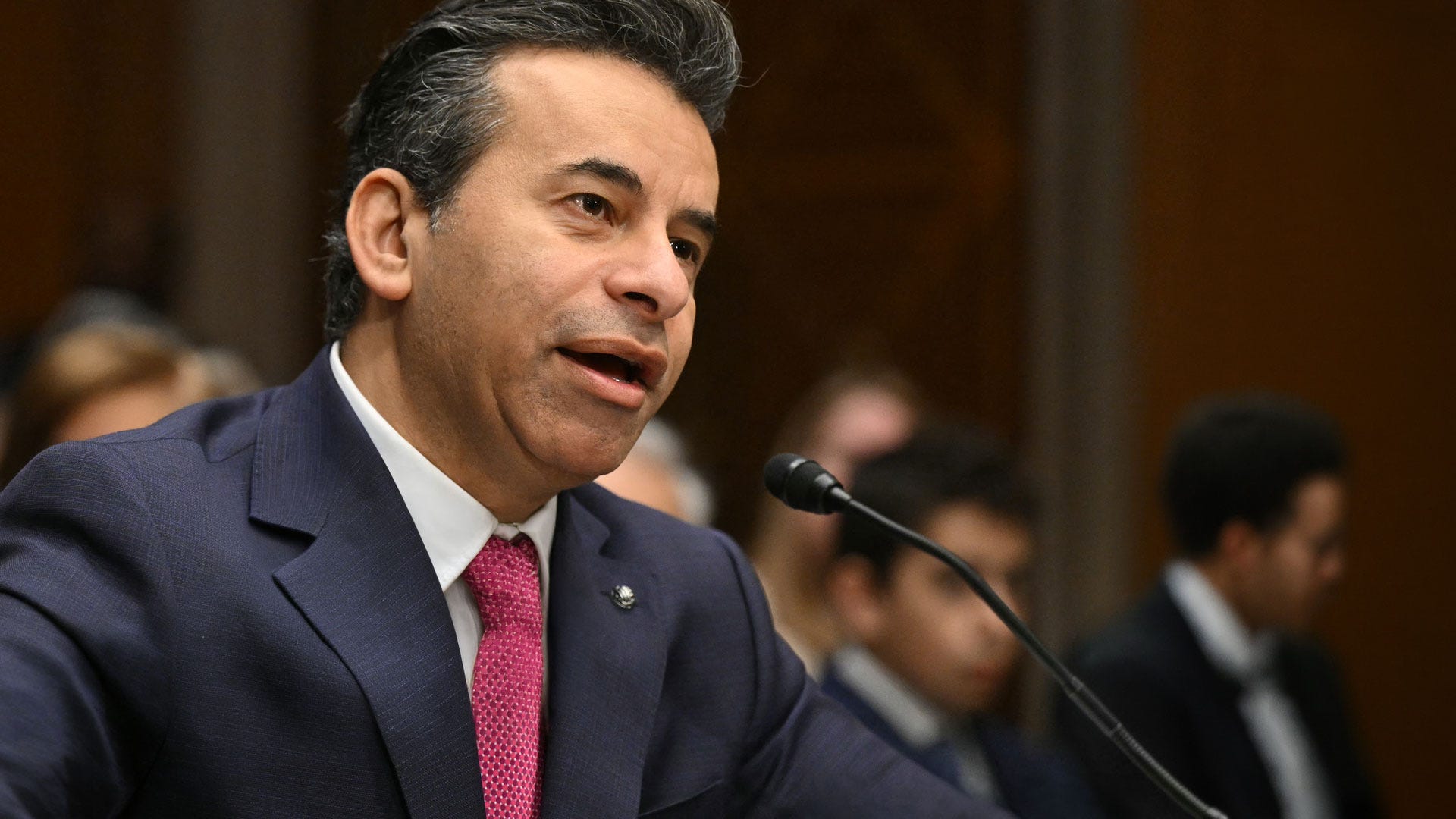
On Tuesday, May 12, Marty Makary resigned as Commissioner of the Food and Drug Administration after 13 months in the role. Politico first reported the resignation; President Trump confirmed it in remarks to reporters at the White House before departing for China, and Kyle Diamantas, the agency’s Deputy Commissioner for Food, was named acting commissioner. Diamantas is a lawyer with no medical training — an unusual profile for the role. Names reported under consideration for the permanent position include former Commissioner Stephen Hahn, who led the agency from 2019 to 2021, and former acting Commissioner Brett Giroir.
Most of the immediate coverage has framed the resignation around the proximate trigger — the fruit-flavored e-cigarette authorization the FDA issued last week, which Makary reportedly opposed — and the political pressure he faced from anti-abortion groups over mifepristone. Both matter. Neither is the most important angle for medtech.
For medical device companies, Makary’s 13-month tenure produced two things, and they pull in opposite directions.
The reform agenda
Makary was the FDA half of the most significant medtech regulatory development of the past year. The Regulatory Alignment for Predictable and Immediate Device (RAPID) coverage pathway, announced in late April as a joint initiative with CMS Administrator Mehmet Oz, was designed to close the median six-year gap between FDA breakthrough authorization and Medicare coverage. His other speed-oriented initiatives during the tenure included expanded use of the National Priority Voucher Program, draft AI lifecycle management guidance issued in January 2025, and a stated emphasis on de novo flexibility — the same pathway J&J used to file for Ottava authorization in January.
By the official metrics, device review has held. CDRH Director Michelle Tarver, who has remained in her role through every leadership upheaval at the agency since her permanent appointment in October 2024, told the MedCon conference last month that the device center authorized 124 new devices in 2025, the third-highest total in CDRH’s history.
The capacity problem
Against that record, Makary inherited and oversaw an FDA that has lost roughly 21 percent of its workforce — more than 4,400 people — between September 2024 and January 2026, according to Office of Personnel Management data analyzed by MedTech Dive. The CDRH was hit in two rounds of firings in February and April of last year; by August, a ProPublica analysis put device center staff losses at more than 20 percent due to cuts and attrition combined.
By April of this year, the strain was no longer abstract. A five-part series published on April 1 by MedTech Dive reporters Elise Reuter and Shaun Lucas interviewed current and former CDRH staff, regulatory attorneys, and consultants who described an agency under sustained pressure. Kelliann Payne, a Hogan Lovells partner specializing in medical devices, told them: “I’ve been writing premarket submissions and interacting with FDA since the late 90s, and this is by far the most volatile up and down, delays in timing that I’ve seen.” Sean Boyd, the former director of CDRH’s Office of Regulatory Programs, described a “culture of fear and anxiety.” Attorneys at Cooley and Arnold & Porter described pre-submission meetings producing inconsistent feedback, mid-application reviewer changes that reset positions taken by earlier reviewers, and deficiency letters arriving with less detail than companies had come to expect.
The reforms Makary authored and the capacity crisis he presided over are not separable. The RAPID pathway, the AI guidance, the de novo pace — every one of them is downstream of whether CDRH has enough trained reviewers to execute. An HHS spokesperson told MedTech Dive in April that the FDA is hiring “more than 1,000 reviewers, inspectors and investigators,” but Boyd noted that training a new CDRH reviewer takes two to three years.
What to watch
Three questions are now open for medtech. The first is succession. Diamantas is acting, not permanent, and his food-and-tobacco profile is a poor fit for the medtech beat. A Hahn-style return would signal continuity with traditional industry expectations on review predictability; a different profile could push CDRH in a different direction. The second is Tarver — she has been the point of stability for the device center through fourteen months of agency turmoil. Whether she remains under the next commissioner is the single most important continuity question for the industry, because she is the operating leader who actually moves the work. The third is the fate of the in-flight pathway implementations: RAPID’s operational details, the final AI lifecycle guidance Tarver previewed at AAMI neXus on April 17, and the de novo backlog that pending submissions like Ottava are entering.
What Makary’s resignation does not change is the structural fact that the agency reviewing medical devices is doing the same work with significantly fewer people than it had eighteen months ago. The Commissioner is gone. The capacity question is not.
SPONSORED BY RŌG HEALTH
Most medical device companies don't fail on technology. They fail on sequencing.
The most expensive mistakes in Class II and III device commercialization aren’t made in the field. They’re made before it — launching before buyer clarity exists, fundraising before the story holds up, hiring before positioning is right.
The CLIF Analysis from RŌG Health is a quick, structured external diagnostic that helps you identify gaps before they become costly. One week. Built for medical device and medtech teams.
Want to put your brand in front of 35,000+ medical device and med tech leaders each week? Contact us to learn more about advertising opportunities.
🧭 About The Pathway
The Pathway is a curated briefing for medical device leaders, focused on regulatory moves, product launches, partnerships, and market signals shaping the industry.
If this was useful, consider subscribing or sharing with a colleague tracking these developments.
Some issues may include sponsored or partner content. Sponsorship does not influence editorial selection of third-party news items.