


FIELD NOTE
Medtronic wins FDA clearance for robot in cranial, ENT surgeries
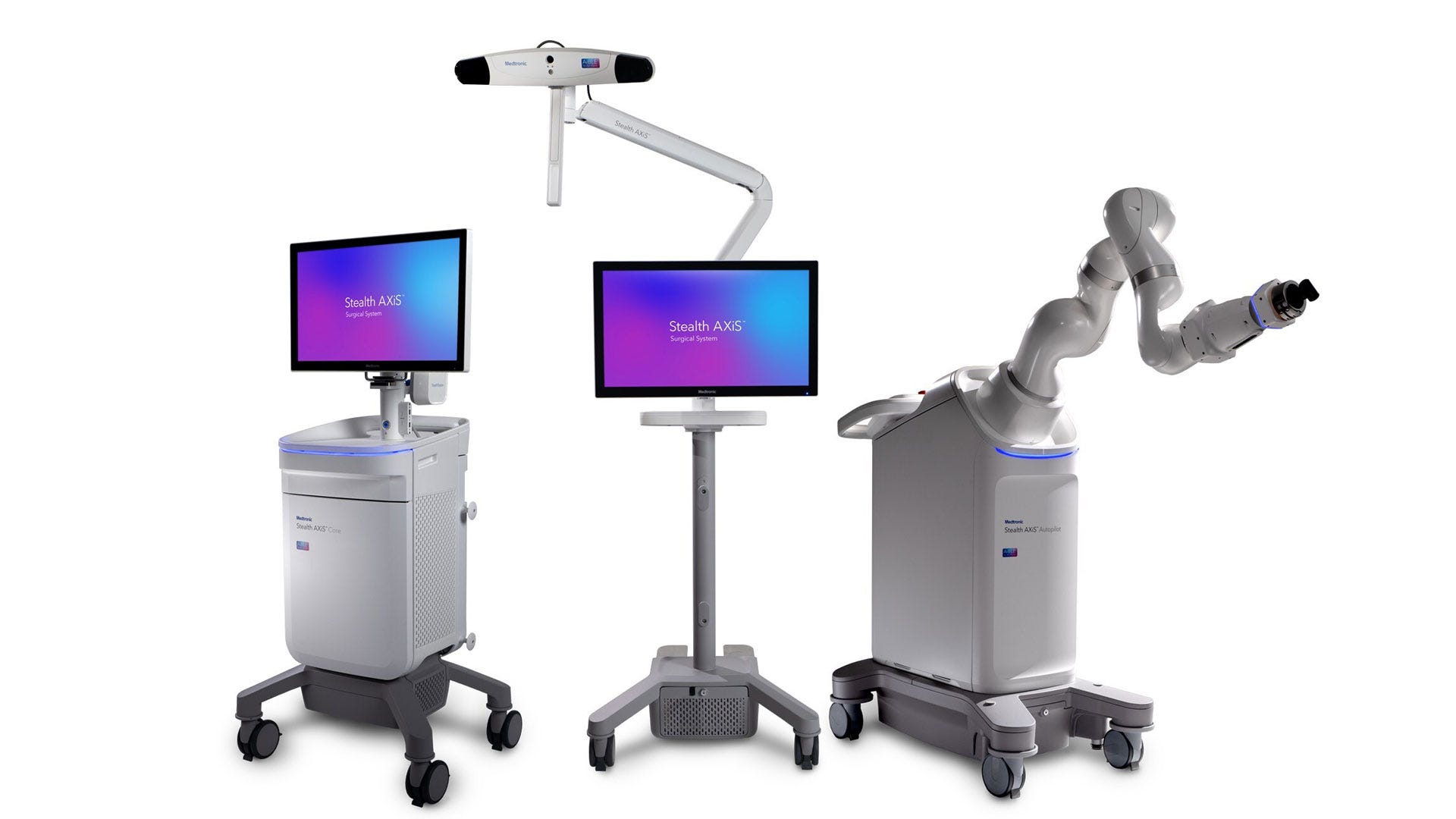
Medtronic’s latest FDA clearance extends its Stealth AXiS platform into cranial and ENT procedures — but the real signal isn’t the new indications. It’s what those indications suggest about where surgical robotics goes when the obvious opportunities are already taken.
For the past decade, robotics scaled through high-volume, standardized procedures where utilization was predictable and the economics were clear. That playbook doesn’t translate cleanly here.
Cranial surgery is inherently limited in volume and highly variable. Surgeons already operate with established navigation systems that deliver sub-millimeter precision. Robotics in this setting isn’t filling a gap — it’s competing against workflows that already work.
ENT complicates the picture in the opposite direction. Sinus procedures are common and repeatable, but they’re also fast and efficient, built around endoscopic techniques that don’t obviously require robotic augmentation. Medtronic’s system adds navigation and visualization at the skull base, but the question is whether that incremental capability justifies introducing a new layer of technology into already optimized cases.
That tension — low-volume precision on one side, high-volume efficiency on the other — is where this expansion lives.
Medtronic’s answer is not procedural. It’s architectural.
Stealth AXiS combines planning, navigation, imaging, and robotics into a single platform, designed to be deployed across spine, cranial, and ENT rather than anchored in any one category. The underlying assumption is that no single specialty needs to carry the system — enough adjacent ones, layered together, can.
There’s precedent for both outcomes.
Robotic platforms that scaled successfully did so by locking in high-volume use cases first, then expanding outward. But expansion into lower-volume or highly specialized segments has historically been uneven, often remaining concentrated in large academic centers rather than translating into broad, repeatable use.
That’s the fault line here.
If this model works, robotics becomes less about individual procedures and more about owning the surgical workflow — a multi-specialty platform that integrates planning, navigation, and execution across service lines. If it doesn’t, it starts to look like a system extending into adjacent indications without a clear driver of consistent utilization.
The technology itself isn’t the constraint. Stealth AXiS integrates real-time imaging, navigation, and robotic guidance — the pieces are there.
The constraint is behavioral.
Hospitals need enough case volume to justify capital investment. Surgeons need repetition to change how they operate. Cranial doesn’t naturally provide the first. ENT may not demand the second.
FDA clearance opens the door. What matters now is whether enough procedures actually move through it — because in this segment, systems don’t gradually become routine. They either earn consistent use, or they remain optional.
Do you see robotics gaining real traction in cranial or ENT — or staying concentrated in major centers?
SPONSORED
Before Your Commercial Story Gets Tested —
Test It Yourself
Most teams don’t pressure-test their commercial story ahead of time. They only find out where it breaks when it actually matters — in front of an investor, a health system, or a potential partner.
RŌG Health’s CLIF Analysis was built for exactly this. Before the room. Before it matters.
RŌG Health is opening ten seats to a limited cohort for medtech and medical device companies at serious commercial inflection points. Two rounds of external analysis. Half the standard rate. Ten seats. First come, first served.
→ Learn more and register today
Want to put your brand in front of 35,000+ medical device and med tech leaders each week? Contact us to learn more about sponsorship opportunities.
🧭 About The Pathway
The Pathway is a curated briefing for medical device leaders, focused on regulatory moves, product launches, partnerships, and market signals shaping the industry.
If this was useful, consider subscribing or sharing with a colleague tracking these developments.
Some issues may include sponsored or partner content. Sponsorship does not influence editorial selection of third-party news items.